
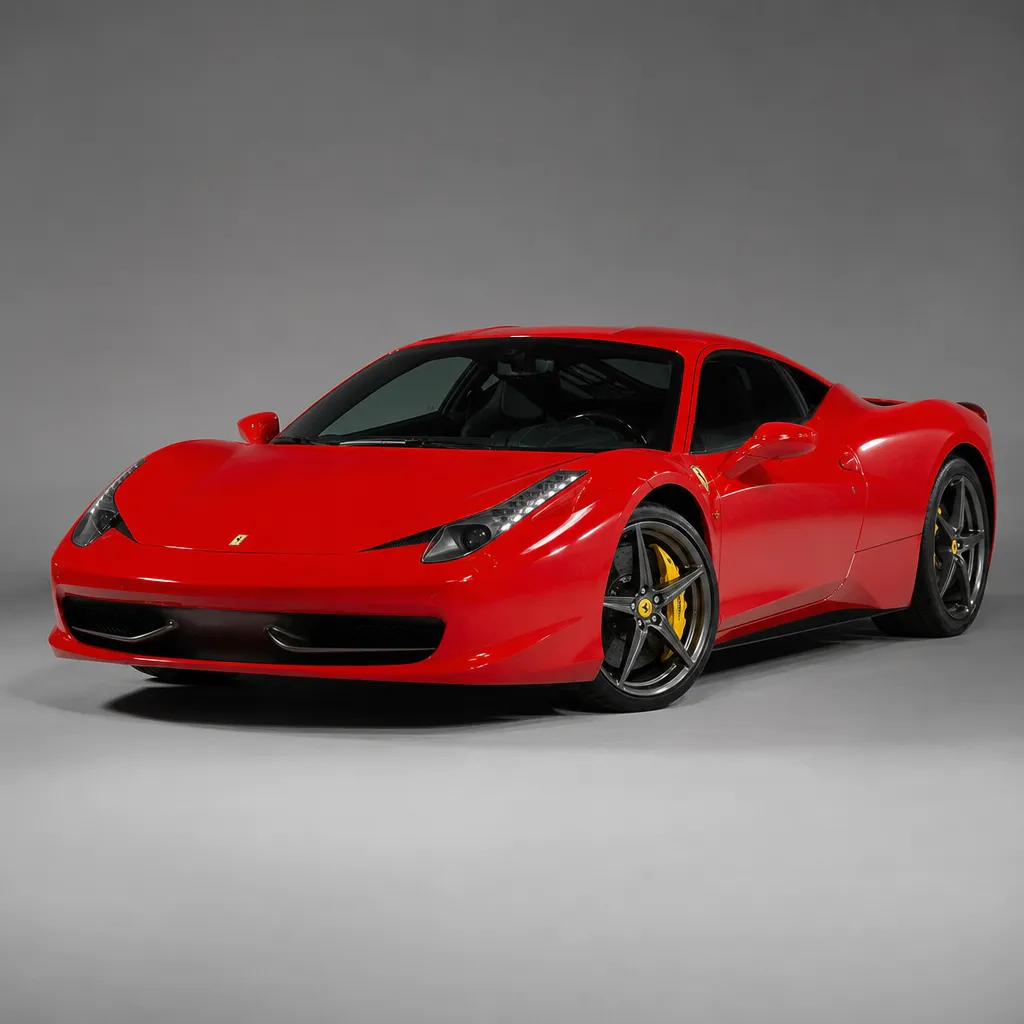
Ferrari 458 Buyer's guide
Ferrari 458: Ferrari’s last naturally aspirated mid‑engined V8 in mainstream production. The 458 Italia (2010–2015) and 458 Spider (2011–2015) use the 4,499 cc F136 family flat‑plane V8 (c. 562 bhp at 9,000 rpm) with a Getrag 7DCL750 dual‑clutch gearbox, aluminium spaceframe and CCM brakes. UK list when new was roughly £170k for the Italia and £200k for the Spider before options; many cars carried £20k–£40k of extras. Today, UK‑supplied RHD Italias commonly advertise around £115k–£160k, with Spiders typically £145k–£210k depending on mileage, year and specification. That asking‑price picture is visible on AutoTrader, PistonHeads and UK marque specialists; online auctions such as Collecting Cars tend to transact a little below retail. Values reflect strong demand for the final high‑revving, non‑turbo V8 and the car’s real‑world usability. As ever, history and condition trump mileage.
Last reviewed:
Running costs and practicalities. Annual servicing is straightforward; once the original seven‑year programme has lapsed, expect roughly four‑figure bills for routine work at a good specialist, more at a main dealer. Brake fluid is a two‑year item; coolant and gearbox/diff oils are best changed on time rather than mileage. Quality tyres are around a thousand pounds a set fitted. A healthy battery and regular use prevent most nuisance faults. Extended manufacturer warranty programmes remain available on inspection; cost varies but sits in the low‑to‑mid four figures per year and can be useful for DCT coverage. Market view. UK‑supplied RHD cars with full histories and desirable options sit at the top of the tree. Left‑hand drive imports and cars with gaps in the record trail are priced accordingly. Colour is subjective; Rosso over Nero still sells quickest, but greys and blues with light interiors are increasingly sought and can carry a modest premium. Mileage sensitivity eases once cars pass 20k; condition, recent maintenance and transparency matter more. Online UK auction results tend to lag dealer retail by a sensible margin; a pre‑purchase inspection by a Ferrari‑literate specialist remains money well spent. What to ask a seller. 1) Have both recalls (2010 wheelarch adhesive and the passenger‑airbag inflator) been completed? 2) When was the last DCT software update and fluid service, and is there any record of mechatronic or clutch work? 3) Has the car ever had paint rectification for bubbling, and if so, by whom and to what extent? 4) Are the CCM discs original; any chips or heat‑checking noted; pad life left? 5) Any roof repairs on a Spider and does it cycle reliably from cold and hot? 6) Battery age and does the car come with its charger? 7) Any aftermarket parts fitted and are the OEM items present? 8) When was the last full geometry set‑up and on what tyres? Deal breakers. Multiple unresolved gearbox codes, roof faults on a Spider, widespread paint bubbling without a proper cure, or CCM discs past salvation can turn a tempting car into an expensive project. There are enough good 458s in the UK to walk away and wait for the right one.
Ferrari’s last naturally aspirated mid‑engined V8 in mainstream production. The 458 Italia (2010–2015) and 458 Spider (2011–2015) use the 4,499 cc F136 family flat‑plane V8 (c. 562 bhp at 9,000 rpm) with a Getrag 7DCL750 dual‑clutch gearbox, aluminium spaceframe and CCM brakes. UK list when new was roughly £170k for the Italia and £200k for the Spider before options; many cars carried £20k–£40k of extras. Today, UK‑supplied RHD Italias commonly advertise around £115k–£160k, with Spiders typically £145k–£210k depending on mileage, year and specification. That asking‑price picture is visible on AutoTrader, PistonHeads and UK marque specialists; online auctions such as Collecting Cars tend to transact a little below retail. Values reflect strong demand for the final high‑revving, non‑turbo V8 and the car’s real‑world usability. As ever, history and condition trump mileage.
The F136 4.5‑litre V8 is chain‑driven (no cam‑belt service) with direct injection and a dry‑sump. On paper: 562 bhp (570 PS) at 9,000 rpm and 398 lb ft at 6,000 rpm; 0–62 mph in about 3.4 seconds. In practice it is robust if kept warm, exercised, and serviced annually. Look for clean cold starts, even idle and crisp throttle response. Any misfire traces or a trembling idle point to coil or injector issues, which are not common but not unknown. Oil leaks are most often from cam cover gaskets or the rear main seal. Coolant radiators sit low and can be holed by debris; check for staining. The exhaust valves should open and close cleanly; lazy valves or split vacuum lines trigger warnings and a flat note. Many cars wear aftermarket exhausts; keep the OE cats with the car and ensure MOT compliance. The Getrag 7DCL750 DCT should shift cleanly hot and cold with no thumps, delays or ‘gearbox overheating’ messages. Early cars benefitted from software updates; evidence of these is a positive. Weak points are the mechatronic unit and clutch seals; repairs can range from a sensor or valve block to full gearbox replacement. Budget that a proper rebuild or replacement can exceed £15k–£25k if it goes wrong. Gearbox and e‑diff oils are nominally long‑life; many specialists change them every 3–4 years on age alone. Always scan the car for DCT and engine codes and ask for a print‑out of gearbox counters and any campaign work carried out by Ferrari.
Double wishbones (front) and multi‑link (rear) with magnetorheological dampers (SCM). Steering is hydraulic and very direct. A well‑set 458 rides firmly but with good compliance; knocks point to worn front lower ball joints or drop links. Dampers can mist or leak; rebuild or replacement is straightforward but not cheap. Alignment transforms these cars; a proper geometry check is worthwhile after any bush or tyre change. Brakes are Brembo CCM with 398 mm fronts and 360 mm rears. For road use the discs last a long time; repeated track work can heat‑check or chip them. Inspect for edge chips and surface crazing. Pads are consumables and can squeal when cold. As a guide, quality pads are in the low four figures for a full set and discs, if needed, are several thousand per axle. Tyres are 235/35 ZR20 front and 295/35 ZR20 rear; mixed brands or old date codes are a negotiating point.
Aluminium structure and panels mean no traditional steel rust, but paint bubbling (filiform corrosion) has affected some cars, particularly around door edges, bonnet leading edges, fuel filler recess and near badges where steel fasteners meet aluminium. Ferrari ran paint rectification campaigns in period; invoices for any factory repaint are a plus. Check the front bumper, splitter and undertrays for kerb rash — there’s no factory nose‑lift on Italia or Spider — and look for cracked plastic undertrays or missing fixings. Rear bumper lacquer can suffer from exhaust heat if the car has been used hard or fitted with a loud exhaust. Inspect radiator fins for stone damage. Headlamps and LED DRLs are costly; check for condensation and all functions. The well‑known 2010 fire‑risk recall (adhesive in rear wheelarch liners) should have been completed early in life; confirm by paperwork. Many 458s also fell under the wider passenger‑airbag (inflator) recall; tick that box too. Spider‑specific: examine roof panel alignment, sealing and the deck’s finish around hinges; operate the roof fully, checking for smooth latching and no graunching from the rams.
Cabins wear well if used, but heat and time take a toll. Leather dash‑tops can shrink at the base of the screen; lifting around vents is common and a proper re‑trim can be £1k–£2k+. Earlier Ferraris suffered sticky soft‑touch coatings; the 458 is better, though window switches, HVAC knobs and door handles can still turn tacky — refinishing is routine now. TFT side displays should be bright with no dead pixels; cycling menus and nav confirms NIT head‑unit health. The steering wheel LED shift‑lights (if optioned in the Carbon Driver Zone) should work; replacement parts are not cheap. Bolster wear on standard seats is normal. Racing seats wear better and are desirable to many. Check parking sensors and the optional reversing camera — both can be temperamental. A healthy battery is essential; expect warning lights and odd behaviour if the car has been left off a conditioner.
We prefer UK‑supplied, RHD cars with a continuous Ferrari main‑dealer history, though a known independent specialist is fine once the original seven‑year service programme expired. Annual stamps matter more than mileage alone. Evidence of completed recalls (2010 wheelarch adhesive remedy; passenger‑airbag inflator) is essential. Ask for proof of DCT software updates and any gearbox or e‑diff work. Paint campaign paperwork adds confidence on cars that were repainted under warranty. Original books, two keys, car cover, charger and tool kit help future liquidity. Options that aid resale include Carbon Driver Zone with LED wheel, forged wheels, Scuderia shields, parking sensors with camera, AFS headlights and racing seats. Many cars wear exhausts from well‑known brands; retain the OE parts. Cars that have seen light, well‑documented touring miles typically drive better than low‑use garage queens. Our view is that a sensible, transparent history beats an ultra‑low odometer with gaps. The manufacturer’s extended warranty programmes remain available by inspection for eligible cars; a recent pass is a useful signal of condition even if you don’t keep the policy.
Bring an OBD reader and, ideally, a Ferrari‑capable diagnostic to interrogate engine and DCT ECUs. Ask the seller to have the car stone cold for start‑up. Then: - Paperwork: full history with annual stamps, recall completion letters, evidence of DCT software updates and any gearbox/e‑diff work; invoices for paint campaigns; MOT history consistency; two keys and charger present. - Engine: cold start should be clean with no tappet noise beyond a brief tick. Check for oil weeps at cam covers and bellhousing, coolant staining at radiators, and exhaust leaks at manifold joints. Confirm fans cut in, temps stable and no warning lights when hot. - DCT: smooth engagement from rest, no delay selecting R or 1st, crisp shifts at light and full throttle, no clunks when coasting to a stop. After a brisk drive, ensure no ‘gearbox overheating’ or e‑diff warnings. Scan for stored DCT codes and review gearbox counters if available. - Chassis: listen for front‑end knocks over small bumps. Inspect dampers for misting, wishbone bushes for play and undertrays for scrapes/missing fixings. Check wheel alignment by steering‑wheel straightness and on‑centre feel. - Brakes: inspect CCM discs for edge chips and surface crazing; measure pad thickness. A brief squeal when cold is normal; judder is not. - Tyres/Wheels: matching premium tyres with recent date codes; even wear across the tread. Forged wheels should be free of cracks and flat‑spots; beware diamond‑cut corrosion. - Body: look for paint bubbling around edges, badges and fuel filler. Check front bumper/lower lips and the floor under the nose for kerb strikes. Headlamps clear and dry. Verify both recalls by paperwork. - Spider: operate the roof several times; look for smooth, quick cycles without pauses. Inspect ram ends for weeps and check deck‑lid alignment and paint around hinges. - Interior: run both TFT screens through all menus; test AFS headlights, sensors and camera. Inspect dash‑top for shrinkage and switchgear for stickiness. Verify steering‑wheel LEDs if optioned. - Road test: the car should track straight, brake square and pull cleanly to 9,000 rpm with no hesitation. Any warning light during the drive warrants investigation. - Post‑drive: re‑scan for new codes. Look for fresh leaks. Review service due items (fluids, plugs, aux belts) and negotiate accordingly.
Our view is that the sweet spot for value and usability is a late‑2013 to 2015 UK‑supplied, RHD 458 Italia with 20k–40k miles, full Ferrari history, evidence of recall completions and DCT software updates, and the Carbon Driver Zone with LED wheel, forged wheels, shields and parking aids. A coupe avoids Spider roof complexity and is keener dynamically on bumpy UK roads. We would pay a little extra for paperwork showing recent gearbox fluid service, fresh tyres and a clean geometry print‑out. Budget roughly £130k–£145k for a strong example at the time of writing. If open‑air driving matters most, the Spider commands a justified premium; buy on condition and roof health first, mileage second.
Known issues
- Dual‑clutch gearbox: mechatronic valve‑block faults, clutch seal leaks and sensor errors; requires proper diagnostics and can be expensive to rectify
- Early paint bubbling/filiform corrosion on aluminium panels, often near fasteners and edges; many were repainted under factory campaigns
- Battery health and charging: low voltage causes spurious warnings and electrical glitches; maintain on a conditioner
- Carbon‑ceramic discs: edge chipping and heat‑checking after track use; replacement is costly
- Magnetorheological damper leaks or misting; knocks from worn front ball joints/drop links
- Radiator and condenser stone damage leading to coolant or A/C leaks
- Exhaust valve actuator/vacuum line failures leading to warnings and fixed‑valve operation
- Headlamp DRL condensation or failure; units are expensive
- Spider roof: micro‑switches and hydraulic ram leaks can cause incomplete cycles or warning messages
- Interior trim: dash leather shrinkage and soft‑touch coatings going sticky
- Recall items not completed (2010 wheelarch adhesive/fire risk; passenger‑airbag inflator)
- TPMS sensor battery failure causing warnings; sensors age out
Guide sections
Start a wanted car search on SCN or browse active buyer requests.