
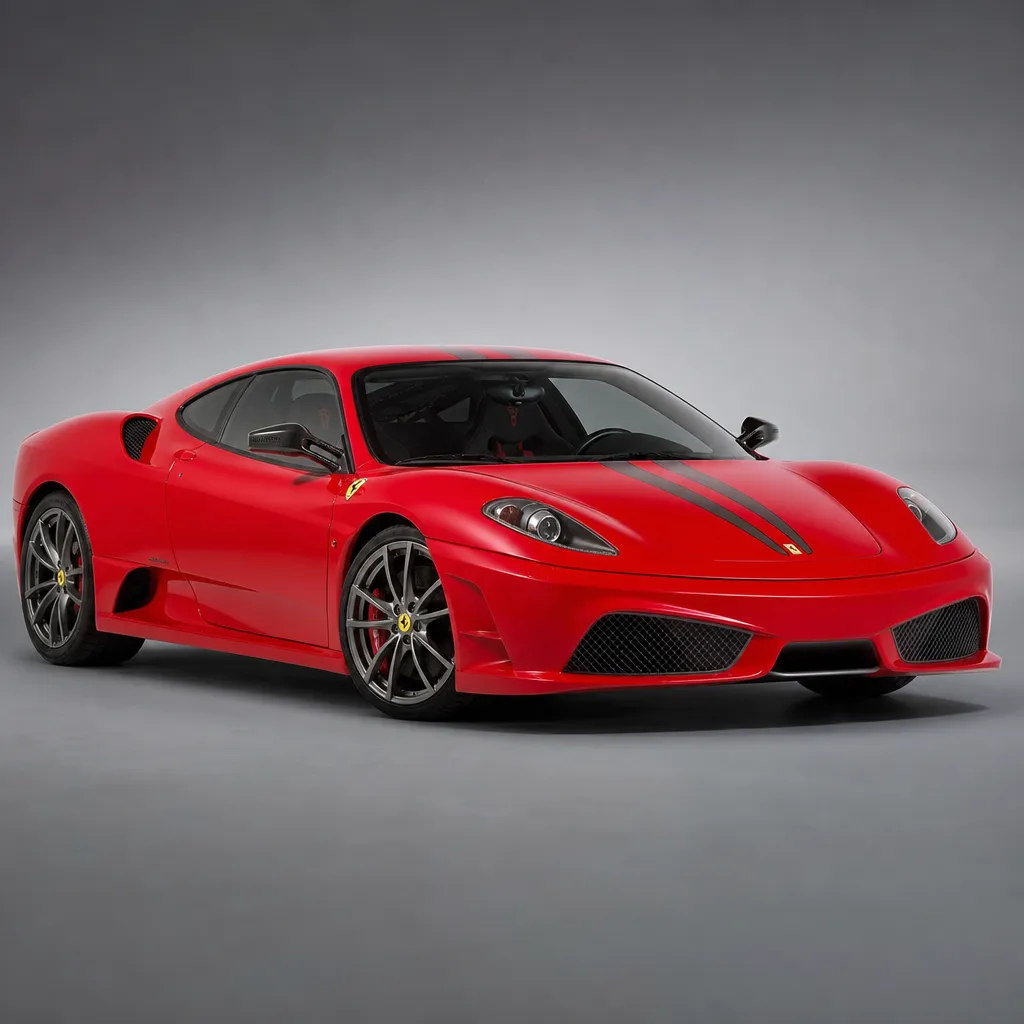
Ferrari 430 Scuderia Ownership
Ferrari 430 Scuderia: Chain-driven 4.3 V8 means no engine‑out belt services, but the 430 Scuderia is still a serious car with serious bills. Independents typically charge around a grand for an annual service; a four‑year “major” with plugs and additional fluids is closer to two to three thousand. Tyres are 19in bespoke sizes and not cheap. Carbon‑ceramic brakes usually last well on road mileage but are very costly if worn or chipped. The single‑clutch F1 system is robust if used correctly, yet clutch and hydraulics remain headline expenses. Insurance sits in specialist territory and varies sharply by postcode, storage and mileage. Sensible owners keep a cash reserve each year to cover wear, suspension and the occasional electronics gremlin.
Last reviewed:
Service rhythm: annually for oil/filter and inspections; brake fluid every two years; gearbox/diff oils typically every 2–4 years depending on use; spark plugs every four years. There is no nose‑lift, so watch kerbs and ramps. Keep the car on a conditioner—low voltage upsets the F1 system and alarm. Real‑world fuel economy is mid‑teens mpg on mixed roads; single digits on circuit. Insurance: limited‑mileage, garaged policies with agreed value usually price best; metropolitan postcodes can add markedly. Track use often requires separate cover. Storage and care: heat‑soak is the enemy—inspect engine‑bay insulation and hoses. Geometry makes a noticeable difference; a fresh alignment transforms the car. Parts supply for wear items is good via specialists; genuine Scuderia‑specific trim is dear and worth preserving.
Chain-driven 4.3 V8 means no engine‑out belt services, but the 430 Scuderia is still a serious car with serious bills. Independents typically charge around a grand for an annual service; a four‑year “major” with plugs and additional fluids is closer to two to three thousand. Tyres are 19in bespoke sizes and not cheap. Carbon‑ceramic brakes usually last well on road mileage but are very costly if worn or chipped. The single‑clutch F1 system is robust if used correctly, yet clutch and hydraulics remain headline expenses. Insurance sits in specialist territory and varies sharply by postcode, storage and mileage. Sensible owners keep a cash reserve each year to cover wear, suspension and the occasional electronics gremlin.
• Carbon‑ceramic discs: chips or cracking can necessitate replacement. Expect £12,000–£16,000 for a full set of discs; pads £800–£1,400 per axle. Measure disc mass and inspect carefully on purchase. • Clutch and F1 hydraulics: driving style dictates life. A clutch change is typically £4,000–£7,000; add £2,000–£3,000 if the F1 pump is tired. Actuator overhaul can add £3,000–£4,000. Avoid repeated reversing up slopes and creeping. • Exhaust manifolds/headers: heat cycling can crack OEM items. Budget £3,000–£6,000 depending on repair or replacement and heat‑shielding. • Suspension wear: ball joints, wishbone bushes and top mounts are consumables. A refresh can run £1,000–£2,000; more if dampers are leaking. • Engine/gearbox mounts: collapse is common; £800–£1,200 to sort. • Cooling and ancillaries: radiators, coolant hoses and thermostats suffer with age/heat; £600–£1,500 depending on scope. • Electrical detail: steering‑wheel LED rev lights, window regulators, parking sensors and sticky cabin plastics can add hundreds to low thousands to rectify. • E‑Diff leaks/solenoids: not frequent but expensive when they occur; £1,500–£3,000.
In practice the Scuderia rewards regular use, proper warm‑up and a battery conditioner. Annual servicing at a good independent is straightforward and there is no belt service, but fluids age with time, not miles, so stick to the calendar. Track days accelerate pad and tyre wear; ceramics tolerate heat but don’t like gravel or careless wheel changes. Many cars are on track‑biased tyres; age and heat cycles matter as much as tread depth. What to ask a seller: recent clutch wear percentage with print‑out; F1 self‑learn and leak history; measured CCB disc thickness/mass and pad life; header/manifold condition and any replacements; suspension arms/ball joints and alignment history; engine/gearbox mount replacement; radiator or coolant work; evidence of regular brake‑fluid changes and plug replacement at four‑year intervals. Ownership niggles are usually small but can be costly if deferred. A proper pre‑purchase inspection by a marque‑literate specialist is money well spent. Our view is to budget an annual reserve and enjoy the car rather than stretching to buy the cheapest example.
Indicative costs and values
- Routine service
- £800–£1,200
- Major service
- £1,600–£3,000
- Tyres
- £1,100–£1,600
- Annual reserve
- £2,500–£5,000
- Annual insurance estimate
- £1,400–£3,000
Estimates are guidance, not quotations; condition and circumstances affect actual costs.
Guide sections
Start a wanted car search on SCN or browse active buyer requests.