
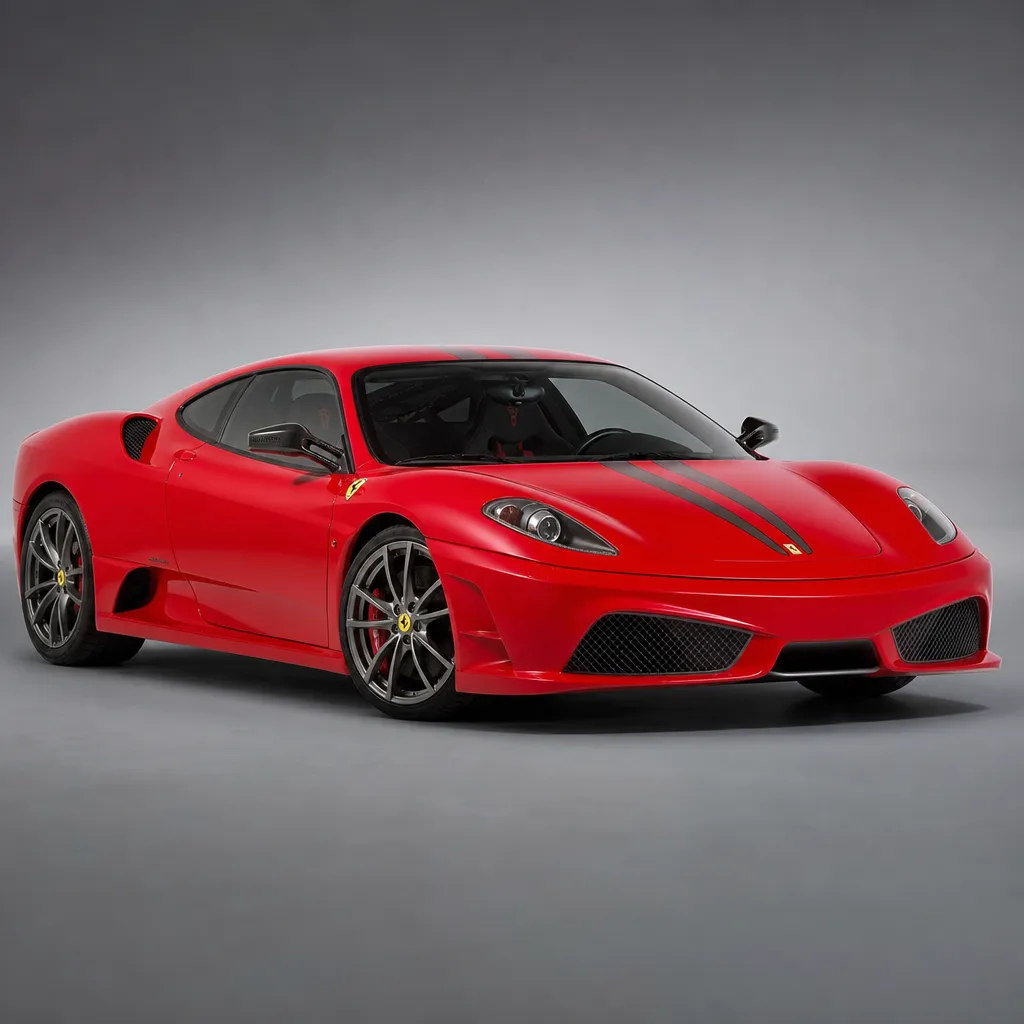
Ferrari 430 Scuderia Buyer's guide
Ferrari 430 Scuderia: Launched at Frankfurt in 2007 and built through 2009, the 430 Scuderia is the sharpened, lighter derivative of the F430 coupé. Ferrari quoted 510 PS (503 bhp) from the 4.3‑litre F136 V8, a dry weight around 1,250 kg, F1‑SuperFast 2 electro‑hydraulic shifting at 60 ms, an E‑Diff, and carbon‑ceramic brakes as standard. UK‑supplied RHD cars are a minority of total output (global production is widely understood to be circa 1,800–2,000 Scuderia coupés). In the UK market, asking prices typically sit in the £180,000–£260,000 band depending on mileage, provenance and specification, with exceptional, very low‑mile cars advertised higher. Running costs are meaningfully lower than older belt‑driven V8s but still serious: annual servicing is modest; consumables and F1 hardware, if needed, are not. A proper inspection and complete service history matter more than chasing the lowest miles.
Last reviewed:
Running‑cost markers (UK specialist ballparks, parts and labour): - Annual service £700–£1,200; plugs typically on a time basis (4 years) or as needed - Clutch replacement £3,500–£5,000 depending on parts and concurrent bearing work - F1 actuator/solenoid remedial work £1,500–£3,500; pump/accumulator £900–£1,800 - CCM pads £600–£1,200 a set; discs vary widely with condition, but a full set can run five figures—inspect before you buy - Engine mounts £1,200–£2,000 - Sticky switch refurbishment £800–£1,500 for a thorough job - Tyres (19‑inch, quality brands) £1,000–£1,300 a set Use these as guide rails rather than hard quotes; ask a Ferrari specialist for a written estimate on any suspect items noticed during inspection. Notes on specification: all Scuderia coupés have F1‑SuperFast 2, E‑Diff and CCM brakes. ‘Racing livery’ stripe, harnesses, radio delete and various carbon trims were optional. Dry weight is quoted at around 1,250 kg; kerb weight varies with options and fuel. UK cars are mostly 57–59‑plate. As ever, check VIN, engine and option codes against the build documentation.
Launched at Frankfurt in 2007 and built through 2009, the 430 Scuderia is the sharpened, lighter derivative of the F430 coupé. Ferrari quoted 510 PS (503 bhp) from the 4.3‑litre F136 V8, a dry weight around 1,250 kg, F1‑SuperFast 2 electro‑hydraulic shifting at 60 ms, an E‑Diff, and carbon‑ceramic brakes as standard. UK‑supplied RHD cars are a minority of total output (global production is widely understood to be circa 1,800–2,000 Scuderia coupés). In the UK market, asking prices typically sit in the £180,000–£260,000 band depending on mileage, provenance and specification, with exceptional, very low‑mile cars advertised higher. Running costs are meaningfully lower than older belt‑driven V8s but still serious: annual servicing is modest; consumables and F1 hardware, if needed, are not. A proper inspection and complete service history matter more than chasing the lowest miles.
The 4,308 cc flat‑plane V8 (F136 series) in Scuderia tune is chain‑driven (no timing belts) and responds well to regular oil changes and heat‑management discipline. Ferrari quoted 510 PS at 8,500 rpm and 470 Nm (c. 346 lb ft) at 5,250 rpm. Against the standard F430, the Scuderia benefits from revised intake and exhaust flow, calibration and reduced rotating/reciprocating mass; in practice it feels keener to rev and slightly harder edged. The engine is generally robust if kept on top of fluids and allowed to warm properly. The single‑clutch F1‑SuperFast 2 transmission can be superb when healthy. It relies on a high‑pressure hydraulic circuit, an actuator and a bank of solenoids. Known weak points are actuator leaks, failing solenoids and tired pumps/accumulators that show up as slow or inconsistent shifts. The clutch is a consumable; life varies with use case. On road‑only cars driven sympathetically, 20–35k miles is typical; track and heavy stop‑start reduce that. Always read clutch wear and PIS with an SD3/Leonardo and verify smooth engagement from cold and when hot. Release/throw‑out bearings can fail and are sensible to replace with the clutch. The E‑Diff integrates with stability systems; pump or pressure sensor faults do occur and present as warnings or inconsistent traction control behaviour. Differential oil and F1 hydraulic fluid should be changed on schedule. Listen for rear‑end whine on light throttle which may indicate diff wear rather than tyre noise. Exhaust manifolds and their brackets can crack with heat cycles; exhaust leaks at cold start or visible sooting in the bay are clues. Keep an eye on engine mounts; when perished they add vibration and can affect alignment between engine and transaxle. Cooling radiators sit low and forward of the rear wheels; debris and corrosion are common if not cleaned. Misfires and spurious lights are often sensor‑ or coil‑related rather than deep mechanical issues, but a diagnostic scan is essential before purchase.
Aluminium spaceframe with firmer springs and recalibrated dampers over the F430. The set‑up is busy but disciplined on British A‑ and B‑roads if geometry is correct. Worn front lower ball joints and wishbone bushes make the car feel nervous and tramline; the Scuderia’s stiffer tune highlights any play. Arms are costly to replace; quality rebuilds are possible but check invoices. Carbon‑ceramic discs (approximately 398 mm front, 350 mm rear) were standard. For road use they last very well; track heat‑cycling and incorrect pad choices shorten life. Inspect discs for chips, cracks at drill points and measure remaining mass; pads are relatively affordable compared with discs. ABS/E‑Diff/Manettino integration is effective; any warning lights mid‑drive deserve investigation (wheel‑speed sensors, steering‑angle sensor and yaw sensor are usual suspects). Steering should be free of dead‑ahead slack; any knock over kerbs or speed humps points to worn bushes or drop links.
Body and chassis are aluminium with steel subframes and plentiful fasteners underneath. True panel rust is rare; corrosion presents as oxidised alloy around chips and white bloom on castings, plus surface rust on steel brackets and fixings. Check carefully: - Front splitter, lower bumper edges and flat under‑trays for grounding, cracks or amateur repairs. Scuderia aero parts and carbon diffusers are expensive. - Rear diffuser and exhaust heat‑shielding for damage and missing fixings. - Wheel‑arch liners and lower rear quarters for stone‑blast; the Scuderia’s tyres throw debris into the rear cooling packs—look through the vents and inspect radiators for fin damage and corrosion. - Carbonfibre exterior pieces (mirror caps, engine‑bay panels, sill covers) for lacquer yellowing, micro‑cracks and previous repair; OEM replacements are dear. - Evidence of track gravel rash on the sills and lower doors even on low‑mile cars; good paint‑protection film helps but isn’t a guarantee. - Jacking points and suspension pick‑ups for distortion from poor lifting. Panel gaps should be even. Any paint‑depth anomalies around the rear quarters or roof warrant careful provenance checks.
The Scuderia’s cabin is intentionally sparse: carbon‑shell seats in different sizes, extensive Alcantara, fabric door pulls, optional harnesses, and often radio delete. Common wear points are: - Sticky soft‑touch coatings on switches, HVAC panel and door handles; refurbishment is straightforward but time‑consuming. - Alcantara shininess and seat‑bolster wear; check stitching at high‑stress points. - Carbon seat shells, centre tunnel and sill covers for lacquer lift and cracks. - Instrument cluster LCD segments and shift LEDs should be even and bright. - If harnesses are fitted, check dates and mounting hardware; many are now out of date for track use. Weight‑saving carpets mark easily; missing mats and odd fixings suggest past track use or interior swaps. Original books, tools and tyre inflator add value.
Our view is that provenance carries a meaningful premium on these. UK‑supplied RHD cars with complete service history from main dealer or recognised specialists, low owner count and original panels/paint are the sweet spot. Ferrari Classiche certification is a plus for collectors but not a substitute for a forensic inspection. Mileage affects price, but condition and recency of major spend matter more. Evidence of the following is reassuring: recent annual service, documented clutch wear reading with mileage correlation, F1 actuator health check, brake fluid and coolant changes, and geometry set‑up. Manifold replacement (OEM or high‑quality equal‑length aftermarket) with the originals retained is acceptable; if aftermarket, originality‑minded buyers prefer reversible changes and factory parts included. Options influence appetite more than they alter the drive. Many buyers like factory ‘racing livery’ stripes, carbon pack, larger carbon seats and harnesses. Colours such as Rosso Scuderia, Giallo Modena and Grigio Silverstone are all saleable; unusual orders need the provenance to back them up. Track use is not disqualifying if maintenance has been meticulous and consumables refreshed. RHD versus LHD and UK‑supplied versus imports are material to value in the UK; factor that into comparisons. On values, current UK dealer and specialist listings typically sit around the mid‑hundreds with low‑mile, high‑spec cars advertised above. Recent UK online auction results for higher‑mile examples tend to be in the lower part of that band. Use asking prices as guidance, not gospel, and interrogate the paperwork.
Use a lift and a Ferrari‑capable diagnostic. Drive the car to temperature. Mechanical and drivetrain - Cold start: listen for exhaust leaks at the manifolds; check idle quality and that all warning lights self‑test and clear. - Warm test drive: verify clean pick‑up from 2,000–3,000 rpm in high gear, no flat spots; watch coolant and oil temps. - F1 operation: in Sport and Race, look for consistent, fast shifts without flare or thump; repeated 1–2 and 2–3 shifts should be crisp. After a spirited run, ensure shift quality is unchanged. - Readouts: clutch wear percentage, PIS, gear engagement counters, F1 hydraulic pressure and E‑Diff status; interrogate stored/pending codes. - Diff/gearbox: listen for whine on trailing throttle; check for leaks at the actuator and along hydraulic lines. - Cooling: inspect radiators through rear vents and from below; look for fin damage and coolant stains. Fans should cycle correctly. Chassis and brakes - Suspension: check front and rear ball joints/bushes for play; inspect dampers for misting. Confirm recent, documented alignment. - Brakes: measure pad thickness; inspect discs for chips/cracks and remaining mass. Confirm no judder under high‑speed stops. - Tyres: check date codes, even wear, and that correct, matched pairs are fitted; budget to replace aged Corsas/Cups. Body and structure - Undertrays and splitter: look for grounding, cracked carbon and missing fixings. - Diffuser and heat‑shields: ensure they’re straight, not heat‑soaked or bodged. - Fasteners/subframes: surface rust is common; heavy scaling or seized bolts suggest neglect. - Paint: look for PPF lines and blending; measure depths around quarters, roof and A‑pillars. Glass and lights should have date‑consistent stamps. Interior and electrics - Sticky plastics: inspect switches/HVAC panel; toggle all functions. - Seats and carbon trim: check shells and lacquer, slider mechanisms and size suitability for you. - Electronics: test manettino modes, shift‑light LEDs, TPMS, windows, mirrors and any fitted audio. Paperwork - Service history with mileage‑consistent invoices; annual servicing, recent brake fluid and coolant, gearbox/F1 fluid changes. - Evidence of clutch reading and any F1 actuator/solenoid work. - Note outstanding Ferrari campaigns/recalls via a dealer check. - Spare keys, books, tools, factory parts if modified.
For driving and holding, we would buy a UK‑supplied RHD car with 12k–25k miles, full dealer/specialist history and evidence of recent spend on the right things: healthy clutch reading with proof, F1 system pressure tests, fresh fluids and geometry. We’d prioritise unmolested cars with reversible tweaks only; if it has upgraded manifolds, we want the original exhaust parts included. Colour is secondary to condition, but factory stripe, carbon seats in the right size and harnesses are desirable. We would avoid delivery‑mile museum pieces (storage deterioration, large premium) and also cars with vague histories, tired CCM discs or F1 warning‑light folklore. Budget sensibly for tyres and a contingency for F1 hydraulics.
Known issues
- F1 transmission hydraulics: actuator leaks, tired pumps/accumulators and failing solenoids causing slow or inconsistent shifts
- Accelerated clutch wear on cars used in traffic or tracked heavily; release/throw‑out bearing failures do occur
- Exhaust manifold and bracket cracking leading to leaks and hot‑bay sooting
- Carbon‑ceramic brake disc chipping/cracking when abused cold or repeatedly heat‑soaked; pad wear sensors can be fragile
- Front and rear suspension wear: lower ball joints and wishbone bushes, drop links; geometry drifts when components age
- Engine mounts collapsing, adding vibration and misalignment
- Electrical niggles: spurious warning lights from ageing sensors, wheel‑speed/steering‑angle/yaw sensors; coil‑pack or MAF‑related misfires
- Sticky interior plastics and Alcantara wear; carbon trim lacquer yellowing or micro‑cracking
- Cooling packs and radiators clogged or corroded from debris; E‑Diff pump/sensor faults
- Battery drain on infrequently used cars; weak batteries create warning‑light cascades
Guide sections
Start a wanted car search on SCN or browse active buyer requests.