
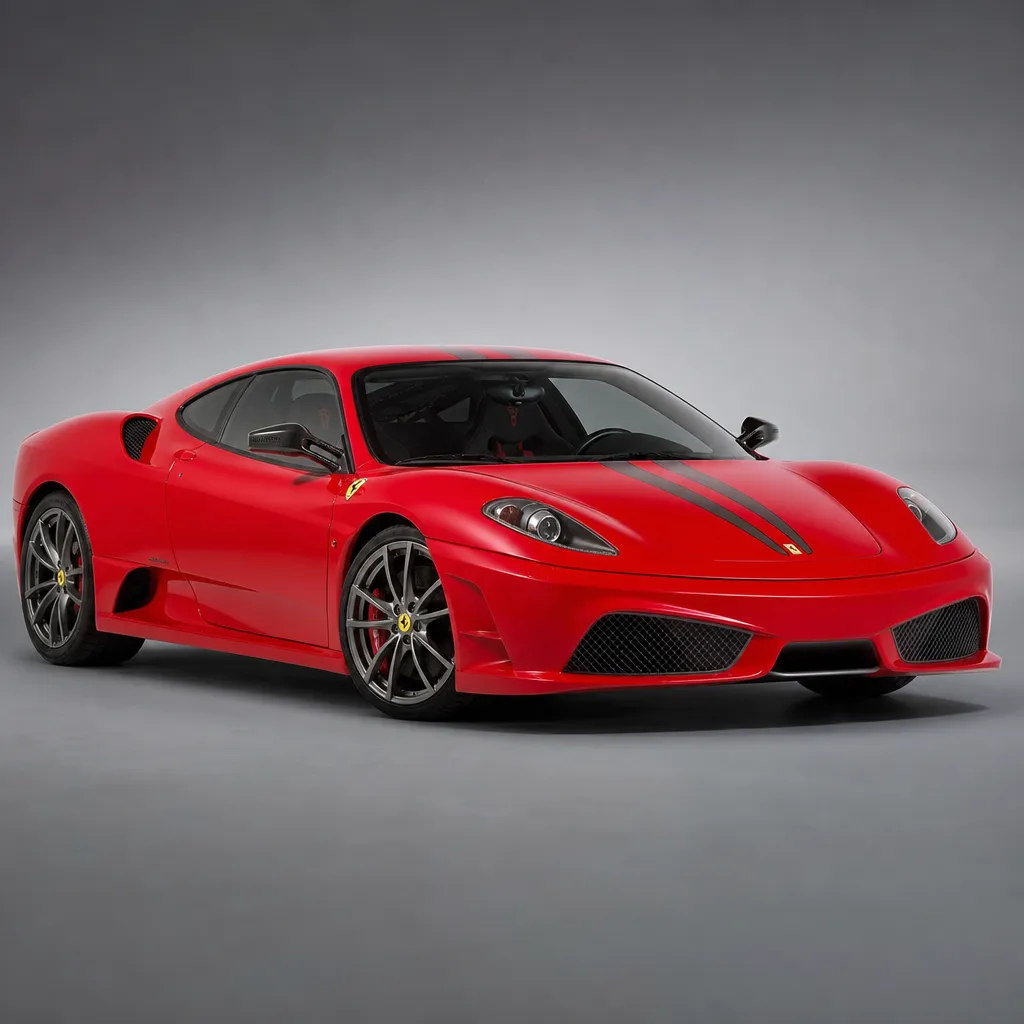
Ferrari 430 Scuderia Finding and sourcing
Ferrari 430 Scuderia: For cars still within a decade of launch the franchised network and Approved‑Used schemes are the natural start; once a model ages, the best stock concentrates with marque specialists and respected independents. The 430 Scuderia now sits firmly in the latter camp, with occasional Approved cars but most good examples handled by Ferrari specialists with deep client lists. The most effective route, in our experience, is to post a wanted search on SCN so brokers, independents and private owners can come to you — invaluable for low‑volume cars where the best examples seldom surface publicly.
Last reviewed:
Ferrari main dealers do list the odd 430 Scuderia under the Approved banner, and a franchised listing can help with paperwork and pre‑sale checks. In practice, most UK‑market Scuderias circulate through marque specialists and established independents who know the cars and their owners. That is where the strongest provenance tends to sit, and where you will hear about cars before they reach public classifieds. When speaking to a dealer, ask precise questions about origin and continuity. Was the car UK‑supplied and RHD from new, who was the supplying dealer, and how many keepers are recorded on the V5C. Request copies of the service invoices, not just stamps, with dates and recorded mileages in sequence. A dealer should be able to provide a factory build specification printout (often from Ferrari’s MODIS system) so you can confirm options — for example whether the racing stripe is factory — and whether the car has Ferrari Classiche certification. Ask for a clear timeline of ownership, where it lived, and how it was used; long‑term private ownership and a coherent paper trail matter as much as mileage on a Scuderia. Remote appraisal is largely about corroboration. Sensible sellers will share high‑resolution scans of the book pack and invoices, the V5C (redacted), MOT history, and photographs of the VIN plate and option labels. If extensive paintwork is declared, ask for who did it, when, and why, plus any paint‑depth report on file. Where a car has been imported, ask for the original foreign registration, customs paperwork, and an explanation of any gaps between dates and odometer readings. None of this replaces a pre‑purchase inspection, but it lets you test the provenance before you commit to viewing. Auctions can be productive, particularly the bigger UK sales (Iconic Auctioneers, Bonhams, RM Sotheby’s London, Historics), but the best Scuderias often sell off‑catalogue through specialists’ client lists. Off‑market sourcing matters here because many owners prefer discretion, and the higher‑calibre cars — UK‑supplied, low‑owner, original paint, correct specification — are frequently placed by phone before any public listing. SCN’s wanted‑ad model is built for this. Post a concise brief — budget, colour tolerance, RHD/UK‑supplied preference, mileage band, and any must‑have options — and we circulate it to our network of Ferrari specialists, brokers and private collectors. Respondents are filtered so you only see cars that match your brief, with provenance documents requested up front. We can then introduce you to the seller for a private viewing and independent inspection, keeping the process efficient and discreet.
For cars still within a decade of launch the franchised network and Approved‑Used schemes are the natural start; once a model ages, the best stock concentrates with marque specialists and respected independents. The 430 Scuderia now sits firmly in the latter camp, with occasional Approved cars but most good examples handled by Ferrari specialists with deep client lists. The most effective route, in our experience, is to post a wanted search on SCN so brokers, independents and private owners can come to you — invaluable for low‑volume cars where the best examples seldom surface publicly.
A UK‑supplied, RHD 2008/09 car in Rosso Corsa or Grigio Silverstone with factory stripe, Classiche certification, two private owners, under 20,000 miles, original paint and complete books, unmodified and bought from a respected Ferrari specialist.
What to look for
- UK‑supplied, RHD cars with Ferrari Classiche certification and a factory build‑sheet confirming original options (including any stripe).
- Full, continuous history with Ferrari main dealers or recognised specialists, backed by invoices that track mileage and dates cleanly.
- One‑ or two‑owner provenance with long‑term private ownership recorded on the V5C and a clear timeline from new.
- Original paint and panels, declared and documented, with a paint‑depth report or photographic evidence of condition over time.
- Unmodified specification with all OEM parts present, complete book pack, two keys, tools, cover and charger.
- Desirable but usable specification for the UK (air‑conditioning, carbon interior, Alcantara), in well‑regarded colours such as Rosso Corsa, Grigio Silverstone, Nero or Giallo Modena.
What to watch for
- Non‑UK imports with patchy early paperwork, km‑to‑miles conversions or odometer entries that do not reconcile across invoices and MOTs.
- Aftermarket add‑ons or cosmetic changes (non‑factory stripes, wheels, interior trims) without documentation or the original parts included.
- Cars that have bounced between multiple dealers or auctions in short order, or with unexplained SORN periods and keeper changes.
- Declared colour changes, heavy paintwork or full wraps without a compelling, documented reason; build‑sheet mismatches to current spec.
- Claims of Classiche or major provenance without scans of the certificate and supporting engine/gearbox number photos.
- Unusual pricing narratives tied to export/re‑import stories, or LHD cars quietly presented as equivalent to UK‑supplied RHD stock.
Guide sections
Start a wanted car search on SCN or browse active buyer requests.