
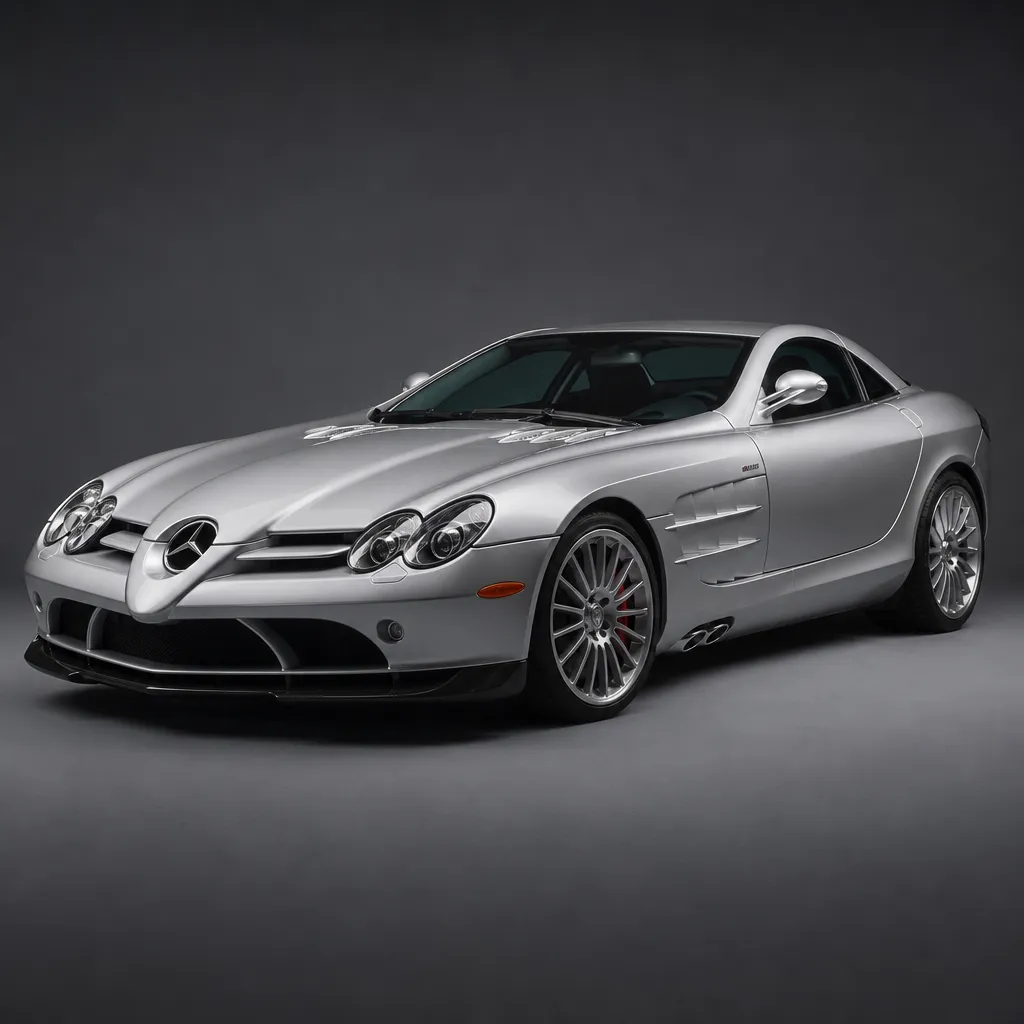
Mercedes-Benz SLR McLaren Buyer's guide
Mercedes-Benz SLR McLaren: Front‑mid‑engined, carbon‑tub GT built at Woking from 2003 to 2009. Standard coupé (2004–2007 in the UK) and Roadster (2007–2009) use AMG’s supercharged 5.4‑litre V8 with a 5‑speed Speedshift R automatic and carbon‑ceramic brakes with an active airbrake. The 722 editions (150 coupés; later 150 Roadster “722 S”) are rarer and markedly pricier; this guide focuses on the standard cars, which offer the best value/useability balance. Most UK cars are LHD; UK‑supplied RHD examples are scarce and attract a premium.
Last reviewed:
Options and spec that matter: - Seats: different carbon shell sizes were available; the correct size materially affects comfort and driving position. Keep the original shells with the car. - Wheels/tyres: factory‑correct fitment is important for geometry and steering feel; avoid aftermarket wheel/tyre mixes. - Colour/trim: many cars are silver/black; unusual Designo paints and tasteful two‑tone interiors can add liquidity in the UK, but extreme specs narrow the buyer pool. - Luggage set and small accessories (trickle‑charger, wind‑deflector on Roadster) add value and are costly to replace. Maintenance budgeting (typical UK specialist figures): - Annual service £900–£1,800 depending on scope; major with plugs/belts closer to £2,000–£3,000. - Brakes: pads £700–£1,200 per axle; discs are the big ticket and should be assessed rather than replaced on age alone. - Tyres: £2,000–£3,000 a set fitted and aligned. Production and rarity: - The standard coupé (UK deliveries from 2004) and the standard Roadster (2007–2009) make up the bulk of cars. The 722 Edition coupé (c.150 built, 2006–2007) and 722 S Roadster (c.150, 2009) are much rarer and command a significant premium in the UK. UK‑supplied RHD cars of any variant are scarce and typically trade above equivalent LHD. Market notes (UK): - As of mid‑2026 we see standard coupés advertised mainly in the £230,000–£320,000 band depending on mileage, steering side and provenance, with standard Roadsters typically £30,000–£60,000 higher. 722 Edition coupés commonly ask from the mid‑£400,000s and 722 S Roadsters notably more. Cross‑check current stock at UK specialists and recent catalogues from Iconic Auctioneers, Bonhams and RM Sotheby’s London for a read on transacted prices. Final thought: buy on condition, paperwork and the quality of composite/bodywork repairs. A cheaper car with tired brakes, poor geometry and weak ancillaries will erase any saving within a year of proper use.
Front‑mid‑engined, carbon‑tub GT built at Woking from 2003 to 2009. Standard coupé (2004–2007 in the UK) and Roadster (2007–2009) use AMG’s supercharged 5.4‑litre V8 with a 5‑speed Speedshift R automatic and carbon‑ceramic brakes with an active airbrake. The 722 editions (150 coupés; later 150 Roadster “722 S”) are rarer and markedly pricier; this guide focuses on the standard cars, which offer the best value/useability balance. Most UK cars are LHD; UK‑supplied RHD examples are scarce and attract a premium.
The M155 5,439 cc SOHC V8 (hand‑built at Affalterbach) uses a Lysholm twin‑screw supercharger and water‑to‑air charge‑cooling. Factory figures for the standard car are 626 PS (460 kW) at 6,500 rpm and 780 Nm from 3,250–5,000 rpm, 0–62 mph in c.3.8 s and 207 mph. The gearbox is the AMG Speedshift R 5‑speed automatic (Mercedes 722.6 family) with three manual programs and a launch mode. In practice the powertrain is robust if serviced on time. Heat is the enemy: coils, crank/cam sensors and loom sheathing can suffer if the car has sat idling or seen repeated heat‑soak. Intercooler pump performance degrades with age, raising intake temperatures and pulling timing; a healthy car will repeat full boost back‑to‑back without obvious fade. Supercharger nose bearings and belts can become noisy; neither is ruinous if caught early, but ignore rumbling and you risk debris damaging the rotors. The 5G‑Tronic is generally strong. Lazy or harsh shifts tend to be fluid/servicing or conductor‑plate related rather than hard‑part failure. Final‑drive and driveshaft CV joints can drone if a car has sat; listen on light throttle at 50–70 mph. Engine and transmission mounts compress with age and add vibration.
Aluminium double‑wishbone suspension with passive dampers. Geometry is aggressive; the inner shoulders of the front tyres wear quickly if toe/camber are not set correctly. Bushes and ball joints age with time rather than mileage. Carbon‑ceramic discs with multi‑piston calipers and an active rear airbrake were standard. They shed speed ferociously when warm. Modulation at urban speeds divides opinion. Discs can craze or chip if abused or if stones get trapped; proper inspection needs someone who understands carbon‑ceramic wear limits. A matched set of discs and pads is a five‑figure spend in pounds; budget accordingly. Airbrake actuation and position sensors can fail and will light warnings. Steering racks can seep; look for ATF staining. Wheel bearings are stout but heat and inactivity can pit races.
Carbonfibre‑reinforced plastic monocoque tub and carbon panels were laid‑up for McLaren; front‑mid engine sits in an alloy subframe. Accident repairs must be to manufacturer method with correct cure cycles; casual cosmetic fixes over damaged weave are unacceptable and devalue the car. Inspect the front splitter, undertrays and the carbon “keels” for jack/lift damage. Stone‑chipping on the nose and A‑pillars is normal; resprays are fine if documented and done by a specialist familiar with carbon. Door gas struts weaken and the butterfly hinges need correct alignment; look for cracked paint around the hinges. Headlamps can haze or trap moisture; ballast failures are not uncommon. Roadster: check the fabric roof for shrinkage at the header rail, rear screen de‑bonding and even latch operation at both ends. Ensure the tonneau and seals keep the cabin dry when pressure‑washed. Coupé: check the bonded rear screen and quarter windows for any signs of lift or stress cracks. Corrosion: most exterior is composite, but galvanic corrosion can occur where alloy brackets meet carbon, and on steel fasteners underneath. Inspect suspension arms, subframes, exhaust heat‑shields and fixings for surface rust; it is a condition marker more than a structural threat if caught early.
Fixed‑back carbon seats came in different shell sizes; an ill‑fitting car is tiring. Ensure the pedal box and column adjust smoothly and that both seat motors work. Leather can shrink on dash tops near the screen; re‑trim is specialist work. Some switchgear goes sticky with age. The period COMAND phone/nav is obsolete; discreet updates are possible without harming originality. Roadster roof mechanism uses manual latches plus powered elements; the windows must index correctly to seal. Window regulators and mirror motors can fail after long storage. Check both batteries and charging. Parasitic drain is common on cars left unlocked or on old software. The alternator/voltage‑regulator recall covered some mid‑2000s cars; paperwork matters.
We look for complete maintenance history with SLR‑authorised Mercedes dealers or recognised SLR specialists. Annual servicing by date, not mileage, is ideal; spark plugs (16 of them) and belts should be on time. Coolant, brake fluid and supercharger oil changes should be documented. Most UK stock is LHD; UK‑supplied RHD cars are scarce and command a meaningful premium. Original sales pack, books, keys, tool‑roll and the SLR luggage set add value. Paint‑to‑sample and unusual Designo interiors exist; tasteful, rare specs help. Special editions: the 722 Edition coupé (2006–2007, c.150 built) and the 722 S Roadster (2009, c.150) carry significant premiums for rarity and their uprated spec; they ride firmer. The roofless Stirling Moss (2009, 75) sits in a separate market. Our view is that a well‑kept standard car is the sweet spot for use and ownership costs. UK market: as of mid‑2026, asking prices on PistonHeads/AutoTrader and stock at UK specialists typically show standard coupés in the low‑to‑mid £200,000s for LHD, rising to c.£300,000+ for the best RHD; standard Roadsters tend to sit £30,000–£60,000 higher like‑for‑like. 722 Edition coupés commonly advertise from the mid‑£400,000s, and 722 S Roadsters from well north of that. Recent UK auction catalogues (Iconic Auctioneers, Bonhams, RM Sotheby’s London) reflect the same spread; use them to benchmark real transacted prices on mileage/spec.
- Paperwork first: service book stamps, itemised invoices, recall proof, software updates, keys, and any evidence of disc/pad replacement with dates and mileages. Confirm seat shell size and original build spec from the data card. - Cold start from stone cold. Listen for supercharger nose rumble, pulley chirp and exhaust manifold leaks. Allow to idle; misfires or uneven idle suggest coil/MAF/O2 issues. Verify that fans cycle and no warnings appear. - Diagnostic scan. Look for historic misfire (P0300‑series), MAF/O2, crank/cam sensor, boost‑sensor and wheel‑speed codes. Check transmission adaptions and slip data. - Road test. Smooth part‑throttle upshifts in Comfort; in manual modes it should respond crisply. No driveline shunt. Check for diff/shaft drone at 50–70 mph. Repeat a few full‑throttle pulls; the car should reproduce full boost without obvious heat soak cutting power. - Brakes. Gentle stops should be clean, not grabby; heavy stops when warm should be drama‑free and straight. Inspect disc faces for chips/crazing and measure remaining mass/thickness to correct procedures. Check the airbrake deploys and retracts correctly without warnings. - Steering/suspension. No knocks over sharp edges. Inspect wishbone bushes/ball joints, dampers for leaks, and front‑tyre inner shoulders. Confirm alignment print‑out if tyres show odd wear. - Body. Lift it properly and inspect the carbon undertrays, splitter and jacking points for crush damage. Look for evidence of proper composite repair methods on any repainted panels. Headlamps for haze or moisture. Door hinge areas for cracks; door struts should hold the door without sagging. - Electrical. Verify both batteries’ health and alternator output. Check all seat functions, pedal‑box and column adjustment, roof (Roadster) open/close cycle, window indexing and mirror motors. Ensure COMAND, parking sensors and climate all work. - Tyres/wheels. Correct SLR‑rated tyres, even wear, recent date codes; buckled rims are common after kerb hits. Budget £2,000–£3,000 for a quality set. - Fluids and leaks. Look around cam covers, charge‑cooler hoses and the transmission pan. Coolant should be the correct spec and free of oil. Any ATF misting near the gearbox loom plug points to a serviceable seal/conductor plate.
Our view is that a late, standard Roadster (2008–2009) suits UK use best: roof‑down ability, slightly improved build detail versus early cars, and running costs that are easier to swallow than the 722 editions. We would prioritise a UK‑supplied RHD car with full SLR‑centre history, recent tyres and documented brake life. A late standard coupé with the same history is the pick if you prefer the look and ultimate rigidity; again, condition and provenance trump mileage. The 722s are superb but sit in a different price bracket and ride more firmly.
Known issues
- Carbon‑ceramic brake disc damage or end‑of‑life; five‑figure replacement cost for a full set
- Rear airbrake hydraulic/position faults triggering warnings; can require pump/sensor work
- Heat‑related degradation of engine bay wiring, coils and sensors (crank/cam); presents as intermittent non‑start or misfire
- Intercooler pump performance drop causing high intake temps and reduced power
- Supercharger nose‑bearing noise and belt wear; rumbling or belt dust is a warning sign
- 5G‑Tronic (722.6) conductor‑plate/speed‑sensor issues leading to limp mode or harsh shifts
- Engine/gearbox mounts collapsing, causing vibration and poor shift quality
- Wheel‑speed sensor faults affecting ABS/ESP; also wiring at hubs can chafe
- Headlamp moisture/ballast failure; xenon bulbs colour‑shift with age
- Door struts weak; door alignment stress cracks at hinges if misadjusted
- Roadster roof: fabric shrinkage, latch/motor issues, rear screen de‑bonding; window indexing faults
- Battery drain on stored cars; alternator/voltage‑regulator recall needs to be completed on affected years
- Cooling system hoses and plastic tees hardened by heat; seepage at clamps
- Front undertray/splitter and carbon keels damaged by poor jacking or kerb strikes
- Tyre inner‑shoulder wear from geometry; flat‑spotting on stored cars
Guide sections
Start a wanted car search on SCN or browse active buyer requests.