
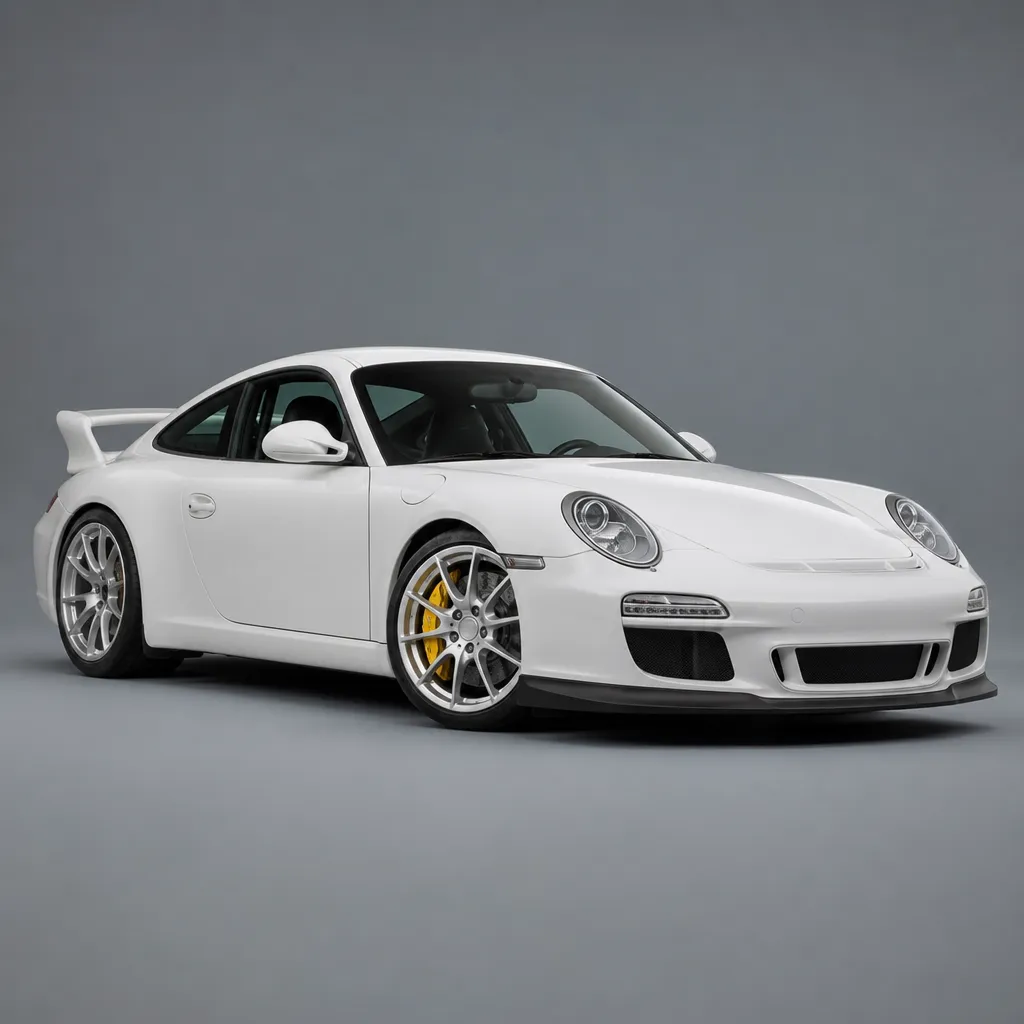
Porsche 911 997 GT3 Buyer's guide
Porsche 911 997 GT3: 997 GT3 (2006–2011) is the sweet spot of analogue Porsche GT: Mezger-based dry‑sump flat‑six, six‑speed manual, adjustable chassis, and little that is frivolous. It copes with road miles, but most have seen track use at some stage. That is not a problem in itself; lack of evidence for careful maintenance is. Key differentiators: 997.1 (3.6, 415 bhp, five‑stud wheels) and 997.2 (3.8, 429 bhp, centre‑lock wheels, revised PASM and dynamic engine mounts). The well‑known GT coolant pipe adhesive issue applies; many cars have had the pipes pinned or welded. On 997.2 there was a 2010 recall for connecting‑rod fasteners; paperwork matters. DME over‑rev data, evidence of recent radiators/condensers, clutch, and geometry setup are worth more than low miles alone. Running costs are real GT‑car numbers. Budget for preventive cooling work (£1,500–£3,000 with engine‑out bundling), clutch (£1,500–£2,500), suspension refresh (£1,000–£3,000 depending on scope) and, if fitted, PCCB consumables (pads hundreds; discs many thousands). Centre‑locks (997.2) need proper inspection and correct torque tools; neglect can be expensive.
Last reviewed:
997 GT3 (2006–2011) is the sweet spot of analogue Porsche GT: Mezger-based dry‑sump flat‑six, six‑speed manual, adjustable chassis, and little that is frivolous. It copes with road miles, but most have seen track use at some stage. That is not a problem in itself; lack of evidence for careful maintenance is. Key differentiators: 997.1 (3.6, 415 bhp, five‑stud wheels) and 997.2 (3.8, 429 bhp, centre‑lock wheels, revised PASM and dynamic engine mounts). The well‑known GT coolant pipe adhesive issue applies; many cars have had the pipes pinned or welded. On 997.2 there was a 2010 recall for connecting‑rod fasteners; paperwork matters. DME over‑rev data, evidence of recent radiators/condensers, clutch, and geometry setup are worth more than low miles alone. Running costs are real GT‑car numbers. Budget for preventive cooling work (£1,500–£3,000 with engine‑out bundling), clutch (£1,500–£2,500), suspension refresh (£1,000–£3,000 depending on scope) and, if fitted, PCCB consumables (pads hundreds; discs many thousands). Centre‑locks (997.2) need proper inspection and correct torque tools; neglect can be expensive.
Facts: Both 997 GT3s use the race‑derived ‘Mezger’ flat‑six with true dry‑sump scavenge stages and separate oil tank. 997.1 is 3,600 cc rated at 415 bhp; 997.2 is 3,797 cc rated at 429 bhp. Both have VarioCam and a single electronic throttle, with a six‑speed manual and a plated limited‑slip differential. Routine service is every 2 years/20k miles; plugs at 4 years. Our view: The Mezger architecture avoids the Carrera’s IMS bearing failure mode. IMS scare stories do not apply to GT3s. Oil control on circuit is excellent, but use raises wear on diff plates, synchros and clutch. A healthy GT3 will idle cleanly when hot, pull hard to the limiter without hesitation, and show stable oil pressure (circa 5 bar cold, 1.5–2 bar hot idle, rising with revs). Some oil use when driven hard is normal. What to check: DME over‑rev report (Ranges 1–6). Occasional low‑range events are common; sustained Range 4–6, especially within the last 200 operating hours, is a red flag. Coolant pipes at the back of the crankcase: confirm pin/weld by invoice. Water pump and thermostat seepage. Rear main seal misting. Coil‑pack cracking. Exhaust manifold studs seizing or snapping. On 997.2, confirm Porsche’s 2010 con‑rod bolt recall/engine replacement was completed; many cars had factory engines under campaign. Differential pre‑load often fades by 30–50k miles with track work; a rebuild transforms traction. Gearbox 2nd/3rd synchros can baulk when hot if tired. Clutch bite near the top and judder in reverse point to imminent replacement.
Facts: Height/camber/toe are adjustable from factory; PASM dampers by Bilstein. 997.1 uses conventional five‑stud wheels; 997.2 introduced centre‑locks. Steel brakes were standard; PCCB optional (380 mm). Front control arms and top‑mounts are consumables on track. In practice: Geometry is everything. Many cars run a fast‑road setup that is kinder to tyres and tramlining than aggressive track camber. PASM dampers weep as they age; rebuild or replace. Steering racks can leak after heavy circuit use. Power‑steering coolers and lines at the front corrode/weep. On 997.2, inspect centre‑lock nuts and hubs for wear, check the latest‑spec nuts by part number, and look for heat/discolouration from incorrect torquing. Brakes: Steel discs are robust and inexpensive compared to PCCB. PCCB is excellent on road and light track, but replacement discs are very costly; many owners swap to steel for track days. Check for lip, cracking between drill holes (steel), and pad taper. ABS faults often trace to wheel‑speed sensors or corroded reluctor rings.
Facts: Bodies are galvanised; rot is rare, but UK road grit and track debris take a toll. Front bumper apertures collect leaves that rot radiators and A/C condensers. Undertrays can hide impact damage. What to inspect: Front and rear wheel‑arch lips for stone rash and bubbling. Jacking points for crush damage. Floor pans and suspension pick‑ups for scrapes. Front radiators/condensers for fin loss and damp staining. Windscreen and rear screen lower corners for corrosion from trapped moisture. Headlamp lenses for haze from heat cycles. Rear quarters inside the engine bay around seams. Front bumper bar and crash cans for evidence of even minor shunts. 997.2 centre‑lock caps for tool marks; splitters and underside of the front bumper for kerb strikes. Paint depth readings are useful; many cars have had front‑end resprays due to chips, which is not a concern if well documented.
Seats and trim: Comfort seat cars suit road use; Clubsport adds a bolt‑in rear cage, harness preparation and a handheld extinguisher. Early 997.1 could be had with folding carbon buckets; 997.2 offered fixed‑back carbon buckets. Check carbon shells for cracks and rails for wear. Harnesses time‑expire for track use; dates matter. Wear points: Alcantara wheels, gearknobs and handbrakes go shiny quickly; budget for retrim if originality matters. Soft‑touch switchgear can peel. PCM 2.1 (997.1) is dated; PCM 3.0 (997.2) is better but still basic today. Many fit discrete Bluetooth/CarPlay modules; tasteful, reversible upgrades are accepted if wiring is neat. Air‑con evaporators can leak (dash‑out job). Window regulators and door‑lock actuators fail with age. Battery drain is common on cars left standing; the alarm siren module and bonnet latch micro‑switch are frequent culprits. A hard‑wired conditioner is almost essential.
Paperwork to see: Full chronology of servicing (OPC or recognised GT specialist), DME over‑rev printouts over time, alignment sheets, and invoices for radiators/condensers, clutch, diff/gearbox work. For 997.2, written proof of the 2010 connecting‑rod bolt recall; if a replacement engine was supplied, the serial number should be recorded. Evidence of coolant pipe pinning/welding is a major positive. Provenance: UK‑supplied RHD cars with low owners and unmolested specification carry a premium. Clubsport package is desirable to track users; Comfort spec is more liquid with broader road appeal. Sensible, reversible upgrades (exhaust back box, mild fast‑road geometry, Cup 2 tyres) do not harm values. Heavily modified or caged front‑to‑rear cars shrink the buyer pool unless priced accordingly. Track use: Expect it. Judge the car by maintenance: frequent oil changes, brake fluid flushes, regular alignment, and timely replacement of consumables. A car that has done a couple of trackdays a year with meticulous upkeep is often a better bet than a low‑miles garage queen with stale fluids. Imports: LHD and non‑UK cars are fine to own but should be priced to suit; check for corrosion underneath if sourced from harsher climates, and ensure the V5C correctly reflects the model (particularly Clubsport).
- Cold start from stone cold; listen for rattles, check for clean idle and even bank temperatures. - Oil pressure: ~5 bar on cold start, 1.5–2 bar hot idle; rises with revs. Confirm no low‑oil‑pressure warnings under lateral load. - DME over‑rev readout with operating hours; avoid recent Range 4–6 events. Cross‑check against tachometer/hour meter. - Cooling: inspect rear coolant pipe joins for evidence of pin/weld; check header tank for crusting; verify radiator/condensers for damp staining and missing fins. - Gearbox: fast 2nd–3rd upshifts when hot; any baulk or grind points to synchro wear. Clutch bite point and reverse judder. - Differential: tight, quiet on lock; excessive chatter or one‑tyre‑fire on hard exits suggests low pre‑load. - Suspension: lift the car; check top‑mount play, arm bushes, drop links and PASM damper weeps. Review latest geometry sheet. - Brakes: measure disc thickness; look for cracks between drill holes (steel). On PCCB, inspect for chips and edge damage; confirm pad life and age. - Wheels/tyres: 997.1 five‑stud—check stud threads; 997.2 centre‑lock—confirm latest‑spec nuts, correct torque history, no hub play, clean threads, intact dust seals. Tyre date codes and even wear. - Underside: splitter and floor scrapes, jacking point damage, clean front crash structure, no kinked coolant/PAS lines. - Engine bay: coil‑pack condition, exhaust manifold studs, RMS misting, belt and pulley condition. - Interior: seat frames (especially carbon) for cracks, harness dates, function of PCM/climate, window regulators. - Paperwork: 2010 997.2 recall evidence, coolant pipe fix invoice, regular brake fluid changes, frequent oil services, alignment records.
For mixed UK road use and occasional trackdays, we would buy a UK‑supplied 997.2 GT3 in Comfort spec with steel brakes, front‑axle lift and full, chronological OPC/GT specialist history. Non‑negotiables: documented 2010 con‑rod campaign, recent DME readout with no recent Range 4–6, invoices for pinned/welded coolant pipes, fresh radiators/condensers, evidence of centre‑lock nuts/hubs to the latest spec, and a recent fast‑road geometry. If you prefer to avoid centre‑locks and value price efficiency, a late 997.1 with five‑stud wheels and steel brakes is our second choice—ideally with proof of cooling work and a recent clutch/diff refresh.
Known issues
- Coolant pipe adhesive de‑bonding on the engine—fitment of pinned/welded pipes is the accepted fix.
- Front radiators and A/C condensers corroding from debris build‑up in bumper ducts.
- DME over‑rev Range 4–6 events indicating past mechanical over‑speed; walk away if recent/sustained.
- PASM damper leaks and top‑mount wear, especially on track‑used cars.
- Front and rear control‑arm inner bushes and outer ball joints wearing quickly under heavy use.
- Manual gearbox 2nd/3rd synchro wear; baulking or grind when hot points to rebuild.
- Clutch and dual‑mass flywheel wear; judder and high bite point are symptoms.
- Exhaust manifold/header cracks and seized/snapped studs, making removal expensive.
- Power‑steering line leaks and cooler corrosion at the front of the car.
- 997.2 centre‑lock hub/nut wear or incorrect torqueing; check for TSB‑updated parts and hub play.
- Coil‑pack cracking and misfires under load.
- Rear main seal misting; often combined with clutch at next engine‑out.
- Battery drain from alarm siren internal battery and bonnet latch micro‑switch faults.
- Air‑con evaporator leaks (dash‑out to replace).
- PCCB consumable costs; chipped or hairline‑cracked ceramic discs are very expensive to replace.
Guide sections
Start a wanted car search on SCN or browse active buyer requests.